Understanding the Power and Control Wheel
- acasha

- Jul 10, 2025
- 4 min read
Updated: Feb 13
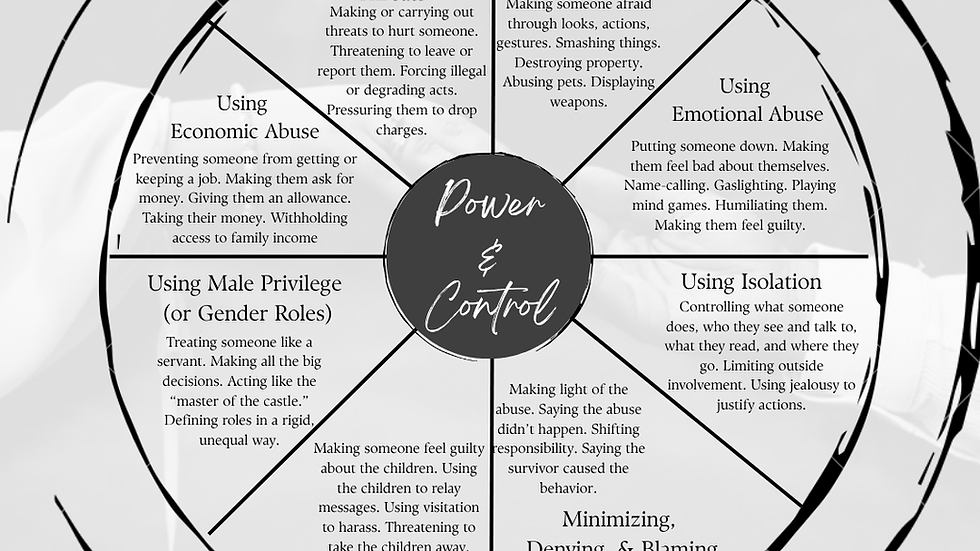
Understanding the Power and Control Wheel in Abusive Relationships
Domestic violence is not just about physical harm—it's about power. Domestic violence is a pattern of behaviors used to gain or maintain power and control over an intimate partner. It can happen to anyone, regardless of gender, age, income level, race, or background.
The framework for understanding abuse is the Power and Control Wheel, developed by the Domestic Abuse Intervention Project in Duluth, Minnesota. This model is widely used by advocates, counselors, and survivors because it maps out the often hidden tactics that abusive partners use to dominate and manipulate.
The inner circle of the wheel represents subtle and continual behaviors that occur over time. These tactics—emotional abuse, isolation, intimidation, and more—form the everyday foundation of abuse. The outer ring of the wheel represents physical and sexual violence—the acts that enforce or reinforce those inner tactics through fear, punishment, or coercion.
Together, these behaviors create a system of control that can be hard to recognize and even harder to escape. But naming the tactics is the first step toward breaking free.
Recognizing Intimidation Tactics
Making someone afraid through looks, actions, gestures. Smashing things. Destroying property. Abusing pets. Displaying weapons.
Example: An abusive partner might punch walls during arguments or slam doors to scare their partner into silence. They may glare or tower over their partner during disagreements, use intimidating body language, or “accidentally” destroy things that matter—like a cherished gift or a phone. The goal isn’t always to hurt physically—it’s to create an environment of fear.
Understanding Emotional Abuse
Putting someone down. Making them feel bad about themselves. Name-calling. Gaslighting. Playing mind games. Humiliating them. Making them feel guilty.
Example: A survivor might be constantly told they’re too sensitive, too emotional, or imagining things. An abuser might criticize everything—from what their partner wears to how they parent or speak. Over time, emotional abuse erodes self-esteem and creates a reality where the survivor starts to believe the abuse is their fault.
The Impact of Isolation
Controlling what someone does, who they see and talk to, what they read, and where they go. Limiting outside involvement. Using jealousy to justify actions.
Example: An abusive partner may insist on checking texts or demand constant updates about where their partner is. They might sabotage friendships, criticize family members, or guilt-trip their partner for wanting to spend time away. Survivors often find themselves completely cut off from support systems without realizing how it happened.
Minimizing and Denying Abuse
Making light of the abuse. Saying the abuse didn’t happen. Shifting responsibility. Saying the survivor caused the behavior.
Example: After an explosive argument or hurtful behavior, an abuser might say, “It wasn’t that bad,” or “You’re overreacting.” If confronted, they may say, “That’s not what happened,” or blame stress, alcohol, or their partner’s behavior. This tactic distorts reality and keeps survivors trapped in a cycle of self-doubt and confusion.
Using Children as a Manipulation Tool
Making someone feel guilty about the children. Using the children to relay messages. Using visitation to harass. Threatening to take the children away.
Example: A parent may use custody as leverage, threaten to take the kids if the survivor leaves, or undermine the other parent in front of the children. They may ask the children to spy, carry messages, or report on their other parent. Survivors often stay longer in unsafe situations out of fear for their children’s well-being.
Understanding Male Privilege and Gender Roles
Treating someone like a servant. Making all the big decisions. Acting like the “master of the castle.” Defining roles in a rigid, unequal way.
Example: An abusive partner might insist on being the sole decision-maker in the home, controlling money, parenting choices, or daily routines. They may expect their partner to fulfill only traditional roles (like cooking, cleaning, or caregiving), while dismissing their thoughts, preferences, or ambitions. This dynamic is about hierarchy, not partnership.
The Consequences of Economic Abuse
Preventing someone from getting or keeping a job. Making them ask for money. Giving them an allowance. Taking their money. Withholding access to family income.
Example: A survivor might be forbidden from working or have their paycheck deposited into a joint account they can’t access. Even basic purchases may require “permission.” Financial control limits independence and is one of the main reasons survivors stay in or return to abusive relationships.
Coercion and Threats: A Dangerous Control Tactic
Making or carrying out threats to hurt someone. Threatening to leave or report them. Forcing illegal or degrading acts. Pressuring them to drop charges.
Example: An abuser may threaten to harm themselves or others if the survivor leaves. They might say, “If you tell anyone, you’ll regret it,” or threaten to call CPS, immigration authorities, or the police. Sometimes, they force their partner to commit illegal acts or withhold important medications or documents as a form of control.
The Outer Ring: Physical and Sexual Violence
Though not always present every day, physical and sexual violence—when it occurs—serves to enforce the inner tactics. A slap, a shove, or forced sex may happen after days or weeks of emotional manipulation. Even the threat of violence can be enough to keep a survivor compliant. These acts are not random or out-of-character. They are part of the same cycle, the same system, the same wheel.
Why Understanding This Matters
The Power and Control Wheel exists because abuse is not just about isolated incidents—it’s about a pattern. A pattern of fear, manipulation, and dominance that can slowly consume a survivor’s sense of reality and self-worth. Recognizing this pattern is the first step to breaking it.
If you saw yourself—or someone you care about—in these examples, know this: you are not alone, and you are not to blame. Every survivor deserves to live a life free from fear, manipulation, and control.
Finding Support and Resources
If you or someone you love is experiencing abuse, you can reach out to:
📞 The National Domestic Violence Hotline: 800-799-SAFE (7233)
💬 Text “START” to 88788
🌐 thehotline.org – For 24/7 confidential support
Conclusion: Empowering Your Journey
Understanding the Power and Control Wheel is crucial for anyone who has experienced abuse. It sheds light on the complex dynamics at play in abusive relationships. By recognizing these patterns, we can empower ourselves and others to seek help and reclaim our lives. Remember, healing is possible, and you have the strength to break free from the cycle of abuse.


Comments